The Difference Between Selling Products and Building a Brand
Products generate sales, but brands create loyalty. Why the best ecommerce businesses focus on more than what they sell, and how brand building drives growth.
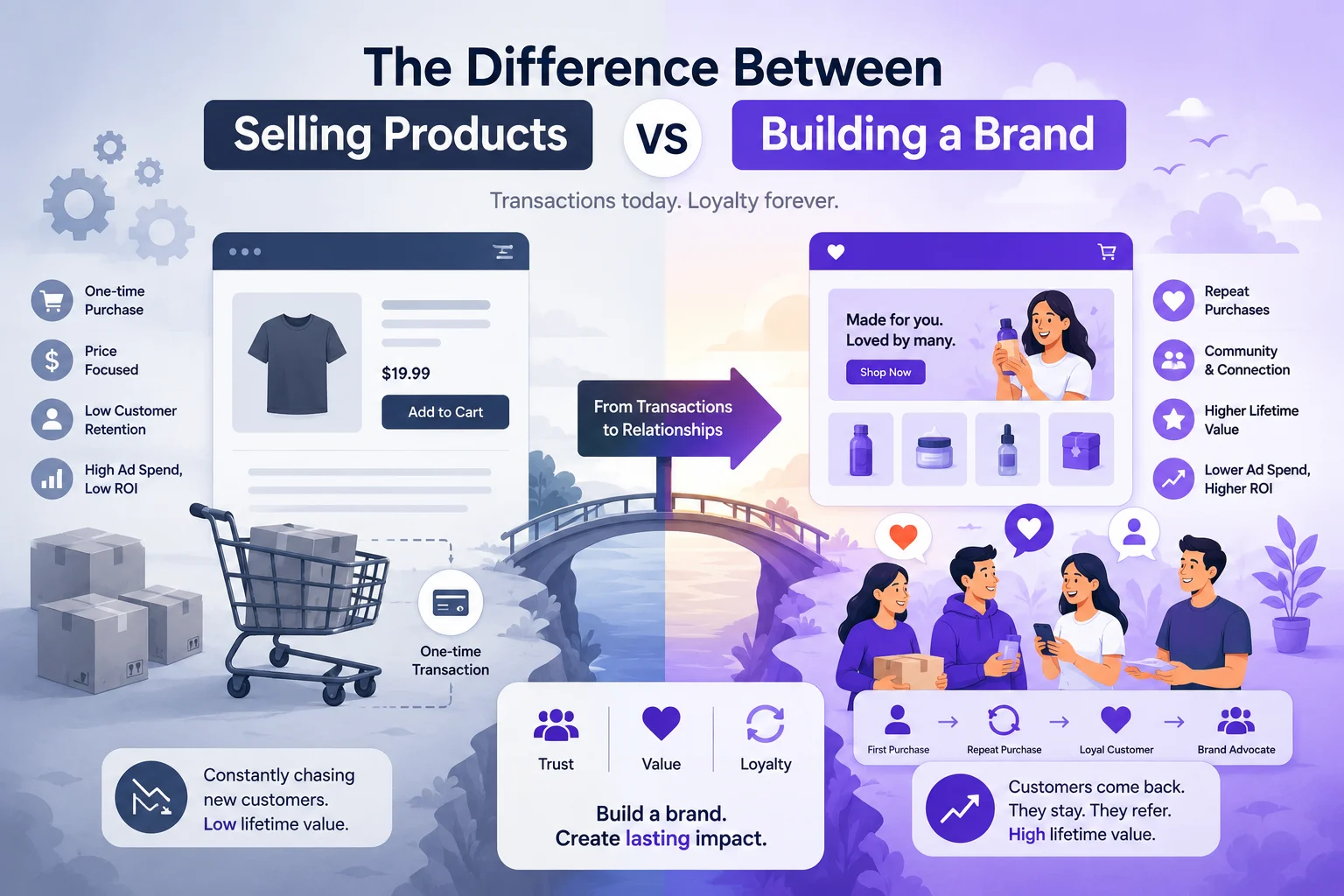
Starting an ecommerce business has never been easier. Platforms like Shopify have lowered the barrier to entry, suppliers are easier to find than ever, and paid advertising can put a product in front of thousands of potential customers within hours.
Selling a product, however, is only part of the challenge. Building a brand is what creates long-term success. Products can be copied, prices can be undercut, and competitors can launch similar products. A trusted brand is far more difficult to replicate.
Products solve problems. Brands create preference.
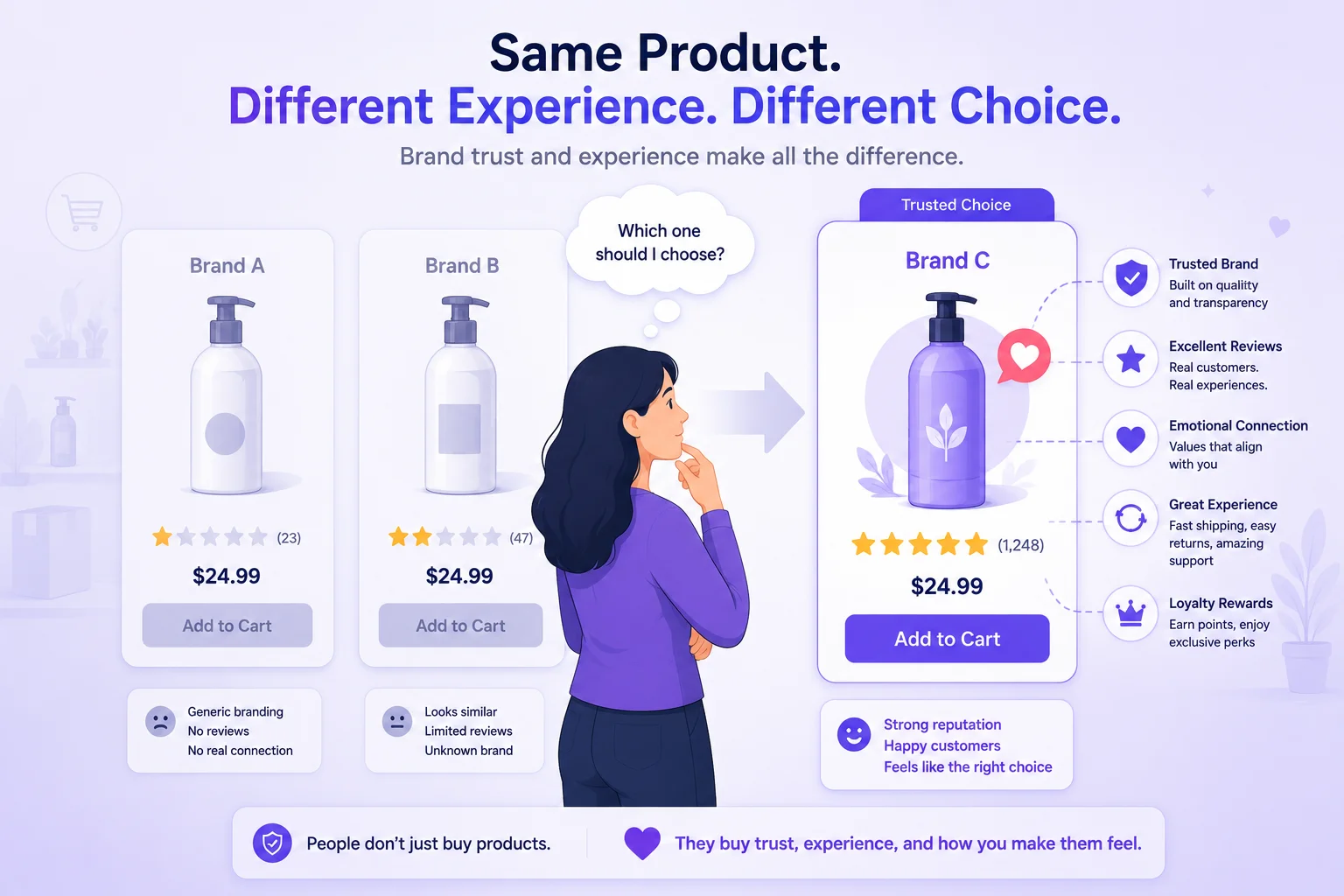
Think about the last time you bought a reusable water bottle, a pair of trainers, or a coffee subscription. There were probably dozens of similar options with comparable features and prices, yet one stood out.
In most cases, it wasn't because the product itself was dramatically better. You recognised the company, trusted its reputation, liked its story, or remembered a positive experience. Those factors gave you confidence before you clicked "Buy". That's the power of a brand.
A product answers the question, "What does this do?"
A brand answers, "Why should I choose you?"
Competing on products is becoming harder
Almost every ecommerce category is more competitive than it was just a few years ago. Whether you're selling skincare, coffee, pet accessories, or home décor, there's a good chance dozens of other stores offer something remarkably similar.
If your biggest advantage is simply what you sell, it probably won't last for long. Competitors can introduce similar products, lower their prices, or spend more on advertising. Before long, you're competing on price instead of value, and that's a difficult position for any business.
Brands compete differently. Instead of trying to win every sale on price or features, they give customers a reason to come back.
Brands compete through experience
The strongest ecommerce brands create experiences that customers remember.
That experience begins long before someone reaches the checkout. It's reflected in your website, photography, messaging, customer support, packaging, emails, and even how easy it is to find the right product. Every interaction shapes how people feel about your business.
This is why two stores can sell almost identical products yet achieve completely different results. Customers rarely become loyal because of a product alone. They become loyal because they trust the business behind it and enjoy buying from it.
Great brands remove uncertainty
One of the biggest reasons shoppers leave an ecommerce store without buying is uncertainty. They aren't sure which product is right, they're overwhelmed by too many choices, or they're worried about making the wrong decision.
The best brands don't simply present products. They guide customers towards the right choice and make the buying process feel straightforward.
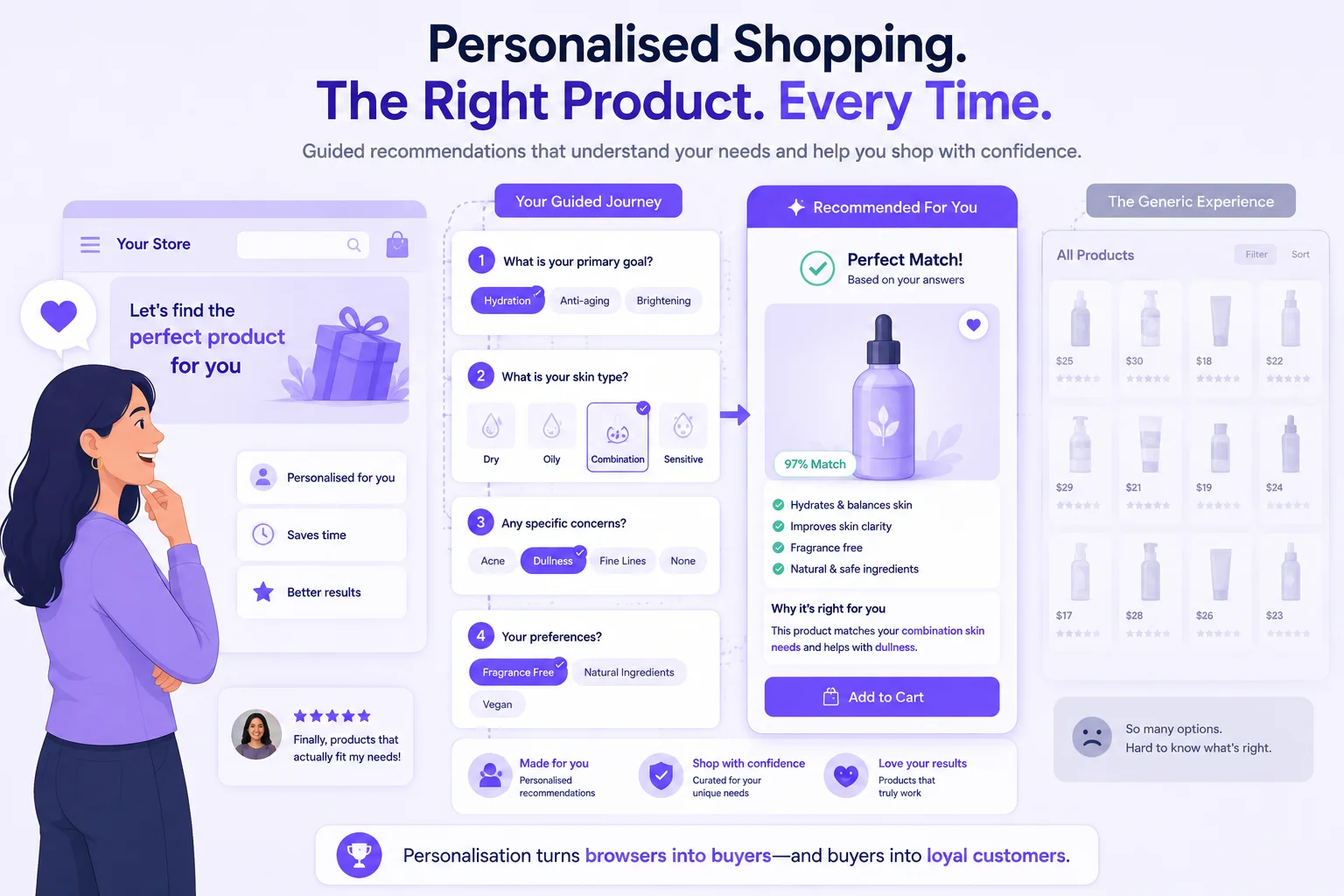
Helpful buying guides, personalised recommendations, clear product comparisons, and honest advice all reduce friction and build confidence. Customers remember businesses that make shopping easier, and that positive experience makes them far more likely to return.
Brands create customers who come back
Selling products generates revenue. Building a brand creates repeat business.
When customers trust your brand, they're more likely to buy again, recommend you to friends, and choose you over competitors, even when similar alternatives are available.
That's becoming increasingly important as customer acquisition costs continue to rise. Every returning customer increases lifetime value and reduces the pressure to keep spending more on paid advertising just to maintain sales.
The strongest ecommerce businesses don't judge success by individual transactions. They focus on building relationships that keep customers coming back.
Building a brand is about consistency
There isn't a single feature that turns a store into a recognised brand. It's the result of consistently delivering a great customer experience at every stage of the journey.
That includes:
- Clear messaging
- A consistent visual identity
- Helpful customer support
- A smooth buying experience
- Honest communication
- Delivering on your promises
Each interaction reinforces what your business stands for. Over time, those moments build trust, and trust becomes one of your strongest competitive advantages because it can't be copied overnight.
Key takeaways
Selling products and building a brand are not the same thing.
Products generate sales. Brands create trust, loyalty, and repeat customers.
In today's competitive ecommerce market, long-term growth comes from giving customers a reason to choose you again and again. Competitors can copy your products or lower their prices, but it's much harder to copy a brand that consistently delivers a great experience and earns customer trust.
Frequently Asked Questions
What's the difference between a product and a brand?
A product solves a customer's problem. A brand is the trust, reputation, and emotional connection customers develop with your business over time.
Why is brand building important for ecommerce?
A strong brand encourages repeat purchases, builds customer loyalty, increases trust, and reduces the need to compete solely on price or paid advertising.
Can small Shopify stores build strong brands?
Absolutely. Brand building isn't about company size. It's about consistency, customer experience, and giving customers a compelling reason to choose your business.
How can ecommerce brands stand out from competitors?
Focus on delivering a better customer experience through clear messaging, personalised shopping, excellent service, and consistent branding rather than competing purely on product features or price.
References
- Harvard Business Review. The Value of Customer Experience.
- McKinsey & Company. The State of Retail and Consumer.
- Bain & Company. Closing the Delivery Gap: The Value of Customer Experience.
- Nielsen. Global Trust in Advertising Study.