Free Shipping Thresholds: The Psychology Behind the Popup That Works
Shoppers start worrying about shipping costs on the product page, long before checkout. Here's the real research behind why, and what to do about it.
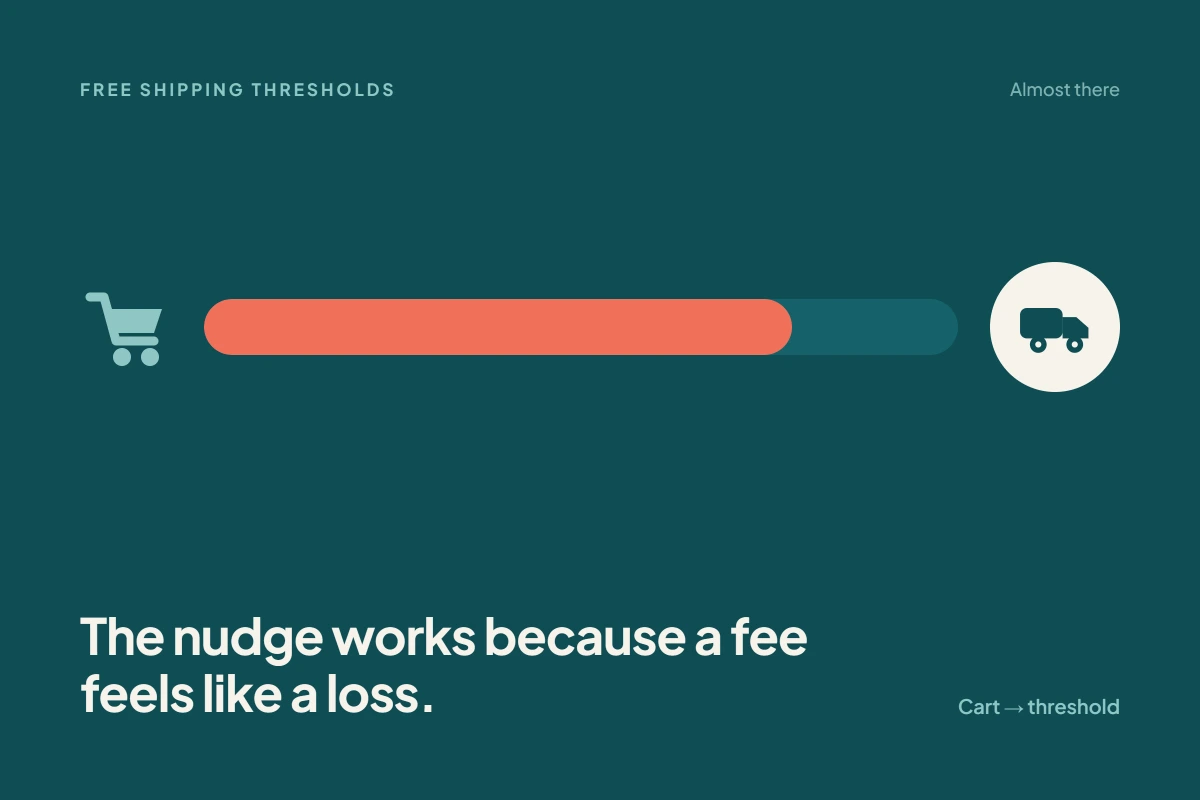
"Spend £12 more for free shipping" is one of the most common prompts in ecommerce, and also one of the most misunderstood. Most advice about it focuses on the threshold number. The more useful research focuses on something earlier: when shoppers actually start thinking about shipping cost, and why a small fee feels disproportionately annoying.
Shoppers worry about shipping earlier than you'd expect
The Baymard Institute, an independent ecommerce UX research firm, found that 64% of users begin thinking about shipping costs as early as the product page, well before they've added anything to a cart or reached checkout.
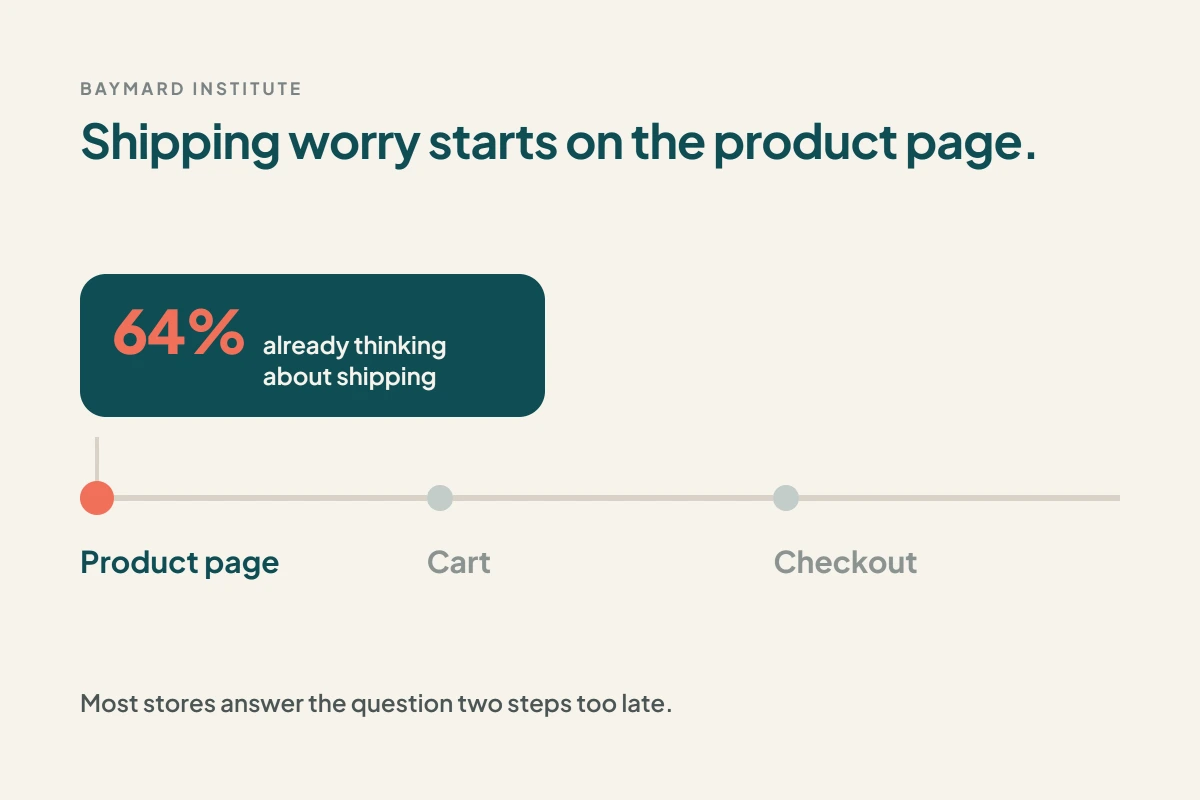
By the time someone gets to the final screen, the question of "what will this actually cost me" has often already been sitting in their mind for several page views.
That timing matters. Baymard's separate checkout research found that 55% of users had abandoned an order in the past quarter specifically because of extra costs appearing late in the process. The problem usually isn't the existence of a shipping fee. It's the surprise.
Baymard also flagged a specific, common mistake: many stores only mention free shipping in a sitewide banner at the top of the page, then show a contradictory shipping charge later on, at checkout, in a cart drawer, wherever the banner's promise doesn't quite carry through. Their research found 32% of sites get this wrong. If your free shipping threshold is only visible in one place, it isn't really visible at all.
Why a shipping fee feels worse than its actual cost
There's a genuine, well-established psychological mechanism behind why removing a small fee has an outsized effect on conversion, and it isn't specific to ecommerce at all. It comes from Daniel Kahneman and Amos Tversky's prospect theory, a foundational finding in behavioural economics: people weigh a loss roughly twice as heavily as an equivalent gain.
A shipping fee registers in a shopper's mind as a loss, something being taken away at the last moment, rather than simply the price of a service. That's why removing it, even a small one, tends to have a bigger positive effect than its actual pound value would suggest. It isn't really about the money. It's about the framing.
What this means practically
A few things follow directly from the research, rather than from guesswork:
- Show shipping cost information early, not just at checkout. Since Baymard found most shoppers are already thinking about it on the product page, that's where clarity does the most good, not the final screen.
- Repeat your free shipping threshold everywhere it's relevant, not just in a banner. A promise made once at the top of the page and contradicted later is worse than no promise at all, since it reads as a broken commitment rather than a simple cost.
- Be precise about the condition. "Free shipping over £50" is clear. A vague banner with no threshold stated, or one that doesn't update to reflect what's actually in the cart, creates the exact contradiction Baymard's research warns about.
- Remember the psychology is about avoiding a loss, not chasing a discount. Framing matters. "You're £8 away from free shipping" taps into loss aversion more directly than a generic "spend more, save more" message, because it names the specific loss being avoided.
Key takeaways
The useful research here isn't about picking the perfect threshold number. It's about timing and consistency: shoppers start worrying about shipping cost far earlier than most stores address it, and a shipping fee that shows up as a late surprise does more damage than the fee's actual size would suggest. Fixing when and how clearly you communicate shipping cost tends to matter more than fine-tuning the threshold itself.
Frequently Asked Questions
When do shoppers actually start thinking about shipping costs?
According to Baymard Institute research, 64% of users begin thinking about shipping costs as early as the product page, before they've added anything to a cart or reached checkout.
Why does a small shipping fee cause so much cart abandonment?
The behavioural mechanism is loss aversion, a well-established finding from Daniel Kahneman and Amos Tversky's prospect theory. People weigh a loss, like an unexpected fee, roughly twice as heavily as an equivalent gain, which is why a shipping charge that appears late in checkout has an outsized negative effect relative to its actual cost.
Where should I display my free shipping threshold?
Baymard's research found that 32% of sites only mention free shipping in a sitewide banner, then show a contradictory charge elsewhere on the page. The threshold should be stated clearly and consistently everywhere shipping is relevant, not just in one banner.
What's the ideal free shipping threshold?
The research reviewed here doesn't support a single universal number, it depends on your margins and average order value. The more consistently supported finding is about timing and clarity of communication, not the specific threshold amount.
References
- Baymard Institute. Product Pages: 'Free Shipping' Should Not Only Be in a Site-Wide Banner.
- Kahneman, D., & Tversky, A. (1979). Prospect Theory: An Analysis of Decision under Risk. Econometrica.