The Paid Ads Trap: How Rising CAC Is Hurting Small Ecommerce Brands
Rising customer acquisition costs make paid growth hard to sustain. Why Shopify merchants get trapped by ad dependency, and how to build a healthier engine.
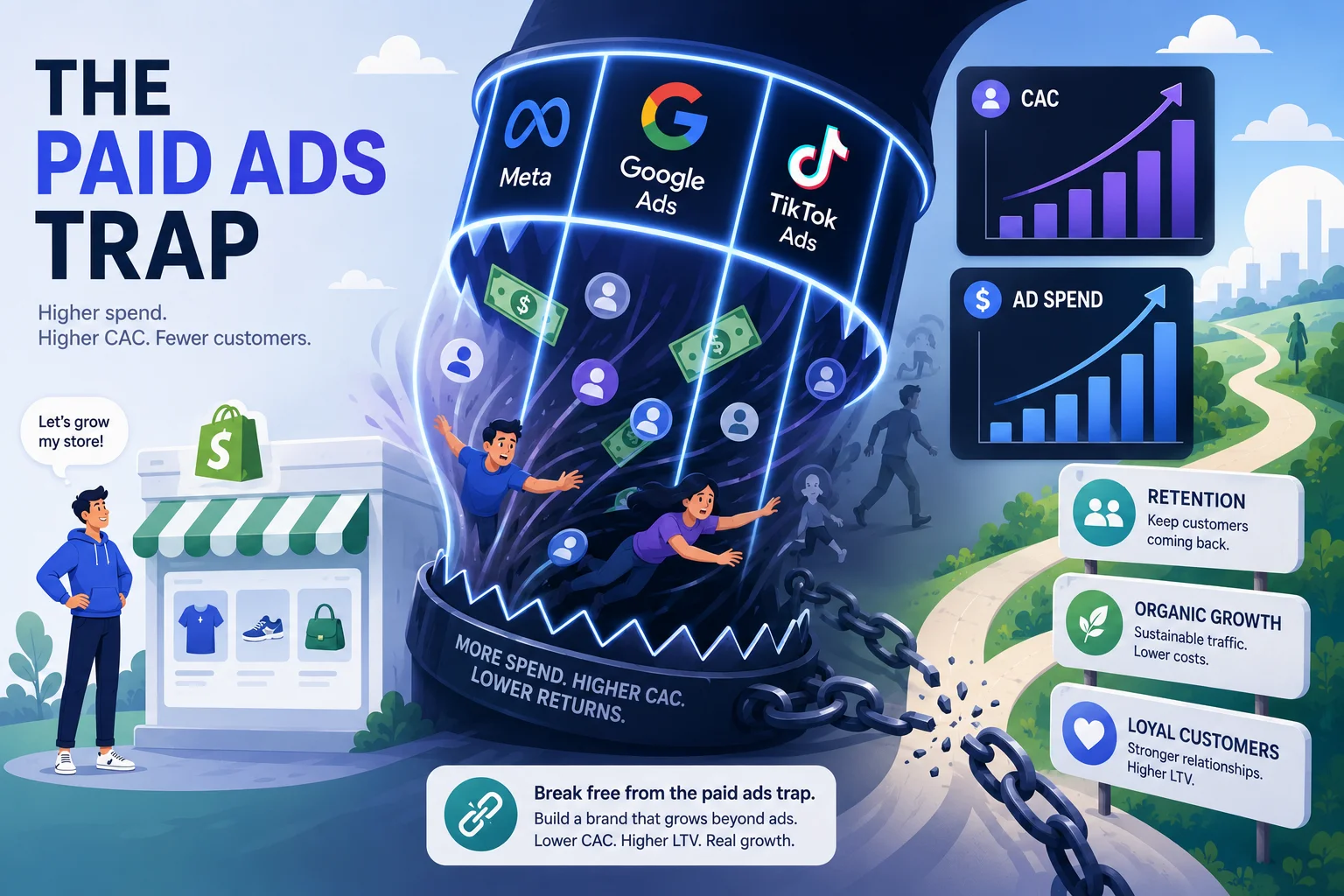
For years, paid advertising was the growth engine behind many successful ecommerce brands. A small business could launch a Shopify store, run Facebook or Google ads, find an audience, and scale quickly without needing a huge marketing team or a physical retail presence.
Today, that formula is becoming harder to sustain. Customer acquisition costs (CAC) continue to rise, competition is more intense than ever, and many Shopify merchants find themselves trapped in a cycle where growth depends on constantly increasing ad spend. This is the paid ads trap.
When every customer starts with an ad
Paid advertising remains one of the fastest and most effective ways to reach new customers. The challenge begins when it becomes the only growth channel.
When a store relies almost entirely on Meta, Google, or TikTok ads, every new customer comes with a direct cost attached. Turn those campaigns off and traffic often disappears too, leaving brands paying to restart growth instead of building lasting customer relationships.
Customer acquisition cost (CAC) measures how much it costs to gain a new customer, but many merchants underestimate the true figure. Advertising spend is only one piece of the puzzle—creative production, agency fees, software subscriptions, promotions, and discounts all contribute to the real cost of acquiring customers. A campaign can look successful based on revenue alone while delivering far less profit than expected.
Why customer acquisition is getting harder
Two major shifts are making paid acquisition more challenging for Shopify merchants.
The first is competition. Ecommerce has become increasingly crowded, with more brands competing for the same audiences across Meta, Google, and TikTok. Larger retailers often have bigger budgets, more creative resources, and richer customer data, making it increasingly expensive for smaller brands to win attention.
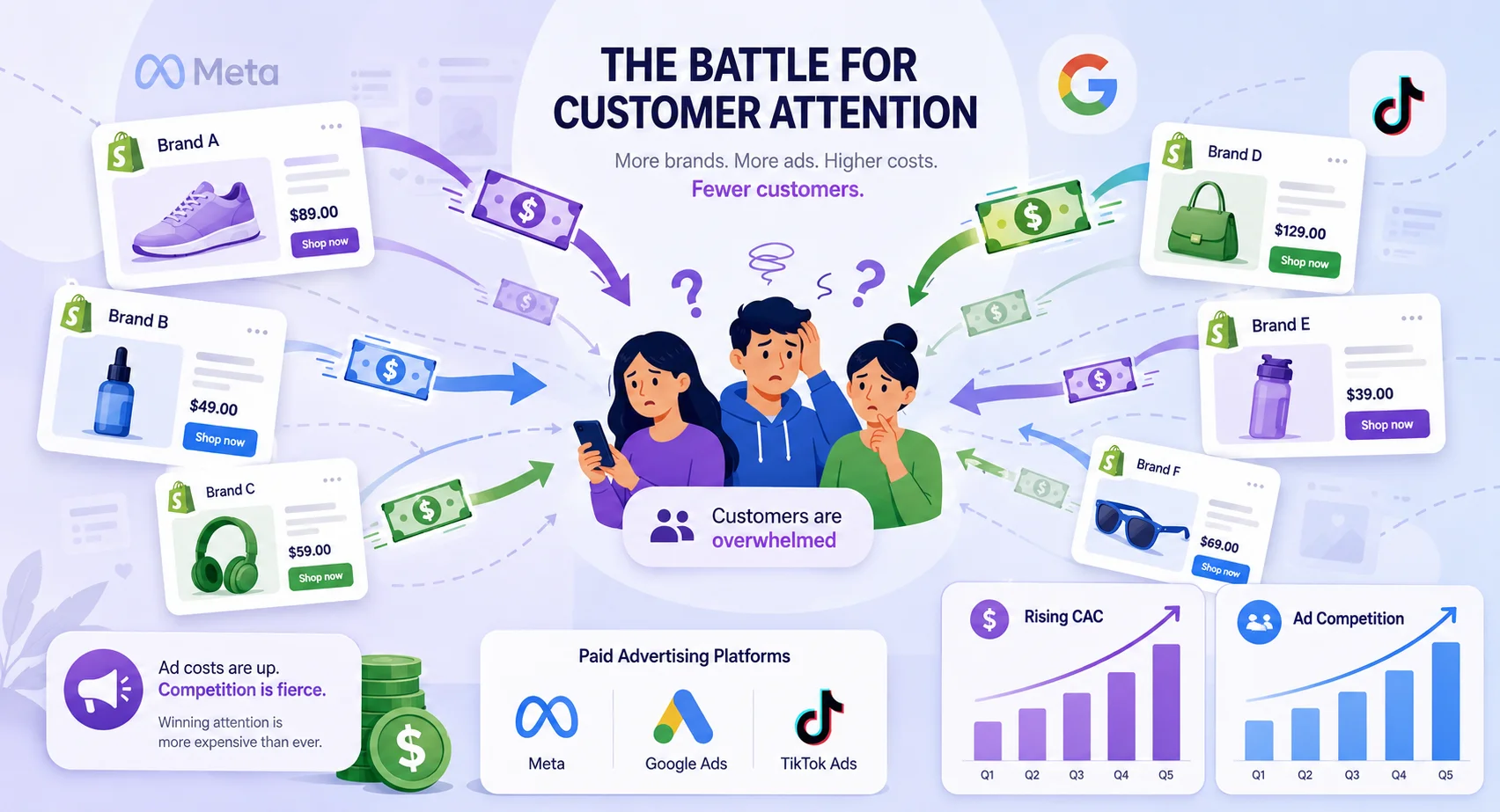
The second is measurement. Privacy changes, particularly Apple's App Tracking Transparency update, have reduced the amount of customer data available to advertisers. While these changes improve consumer privacy, they've also made it harder for merchants to understand which campaigns are driving profitable sales, leading many brands to spend more with less certainty about what's actually working.
Stop chasing more traffic. Create more value
When customer acquisition becomes more expensive, the instinct is usually to increase budgets, launch more campaigns, or test new audiences.
A better question is:
How can we make every customer more valuable?
A business that spends $40 to acquire a customer who buys once has a very different growth model from one that spends the same amount to acquire a customer who returns several times. That's why customer retention is just as important as customer acquisition.
The strongest ecommerce brands don't simply focus on finding new customers—they build systems that encourage existing ones to come back. Common strategies include:
- Email marketing
- Loyalty and rewards programmes
- Personalised shopping experiences
- Product recommendations
- Strong post-purchase journeys
The goal isn't to stop using paid advertising. It's to stop paying to restart every customer relationship from scratch.
Building growth beyond paid ads
Reducing dependence on paid advertising doesn't mean turning it off. Paid channels remain an important part of a healthy growth strategy, but the most resilient ecommerce brands use them as an accelerator rather than the foundation of their business.
They also invest in channels they own, such as:
- Organic search and content marketing
- Customer referrals
- Community building
- Creator and influencer partnerships
- Repeat purchase and retention strategies
These channels typically take longer to build than paid campaigns, but they create long-term value that doesn't disappear when ad budgets are reduced.
The conversion opportunity many brands overlook
When acquisition costs rise, it's tempting to focus exclusively on driving more traffic. Often, however, the biggest opportunity is improving what happens after someone arrives.
Better product pages, clearer messaging, stronger social proof, and a smoother checkout experience can significantly improve conversion rates. Increasing the percentage of visitors who become customers makes existing traffic more profitable without increasing advertising spend.
Growth isn't only about attracting more visitors—it's about getting more value from the visitors you already have.
Key takeaways
Paid advertising isn't going away, and it remains one of the most effective ways to acquire customers. The real risk comes from relying on it as your only growth engine.
The strongest Shopify brands combine paid acquisition with customer retention, conversion optimisation, and owned marketing channels like email, SEO, referrals, and content. Instead of focusing solely on buying more traffic, they maximise the value of every customer they acquire.
Sustainable ecommerce growth doesn't come from spending the most on ads—it comes from building a business customers choose to return to.
Frequently Asked Questions
Are paid ads still worth it for Shopify stores?
Yes. Paid advertising remains one of the fastest ways to acquire new customers and can scale effectively when campaigns are profitable. The key is ensuring it's one part of a broader growth strategy rather than the only source of sales.
What is a good customer acquisition cost for ecommerce?
There's no universal benchmark. A healthy CAC depends on your product margins, average order value, and customer lifetime value (LTV). A higher CAC can still be profitable if customers return and generate more revenue over time.
How can Shopify merchants reduce their dependence on paid ads?
Focus on increasing repeat purchases, growing your email list, improving organic search visibility, creating referral programmes, and optimising the customer experience after the first purchase. Diversifying acquisition channels makes growth more resilient.
Why are ecommerce ads becoming more expensive?
More brands are competing for the same audiences, driving up advertising costs. At the same time, privacy changes have made campaign measurement and optimisation more difficult, making it harder for merchants to identify which ads are generating profitable growth.
References
- Shopify. Customer Acquisition: Strategies for Ecommerce Growth.
- Apple. App Tracking Transparency Framework.
- Baymard Institute. Ecommerce User Experience Research.