The Real Impact of Reviews and User-Generated Content on Conversion
A product with five reviews sells 270% more often than one with none. But chasing a perfect five-star rating might actually be costing you sales.
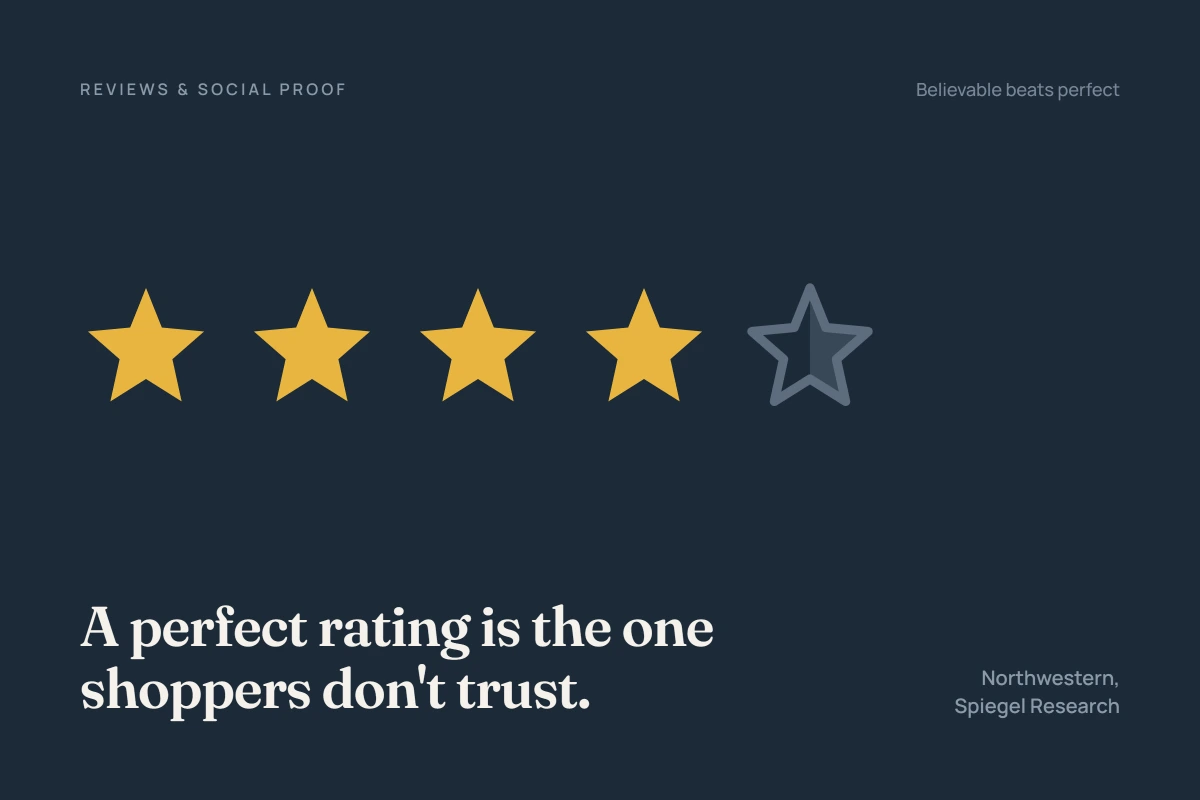
Most merchants treat a five-star rating as the goal. The research says otherwise, and the reason why is one of the more genuinely surprising findings in ecommerce conversion research.
Reviews move the needle more than most stores realise
Northwestern University's Medill Spiegel Research Center studied this properly, analysing real purchase data across multiple online retailers, in one case over 100,000 SKUs across 22 product categories, plus a separate deep-dive with a high-end gift retailer. The findings are stark. A product displaying five reviews has a 270% greater purchase likelihood than an identical product with none. The effect isn't small or marginal, it's the difference between a product that sells and one that quietly sits there.
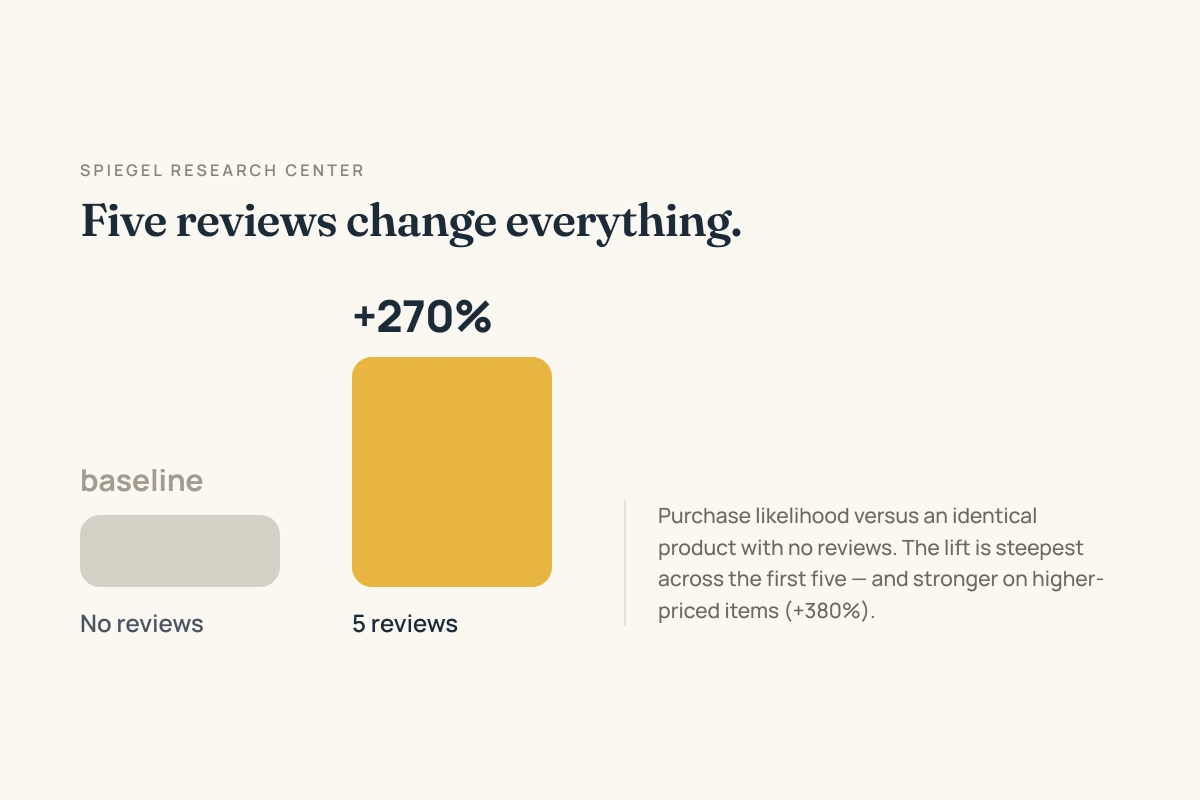
Price matters too, and in the opposite direction most people would guess. Reviews increased conversion by 190% for lower-priced products, but by 380% for higher-priced ones. The more a shopper has to commit financially, the more they lean on other people's experience to decide. That makes intuitive sense once you say it out loud: nobody needs much reassurance to buy a £4 item, but a £200 one is a different story.
One more practical detail: the benefit of additional reviews drops off quickly. Most of the conversion lift happens in the first five reviews. Chasing hundreds more matters far less than getting a handful of genuine ones onto a new product early.
The part that surprises most merchants
Here's the finding worth building a strategy around. Products rated in the 4.7 to 5.0 star range are less likely to be purchased than products rated 4.2 to 4.7.
That's not a typo, and it's not a fluke. Professor Edward Malthouse, the Spiegel Research Center's research director, explained the mechanism directly: when shoppers see a product with nothing but five-star reviews, they get suspicious.
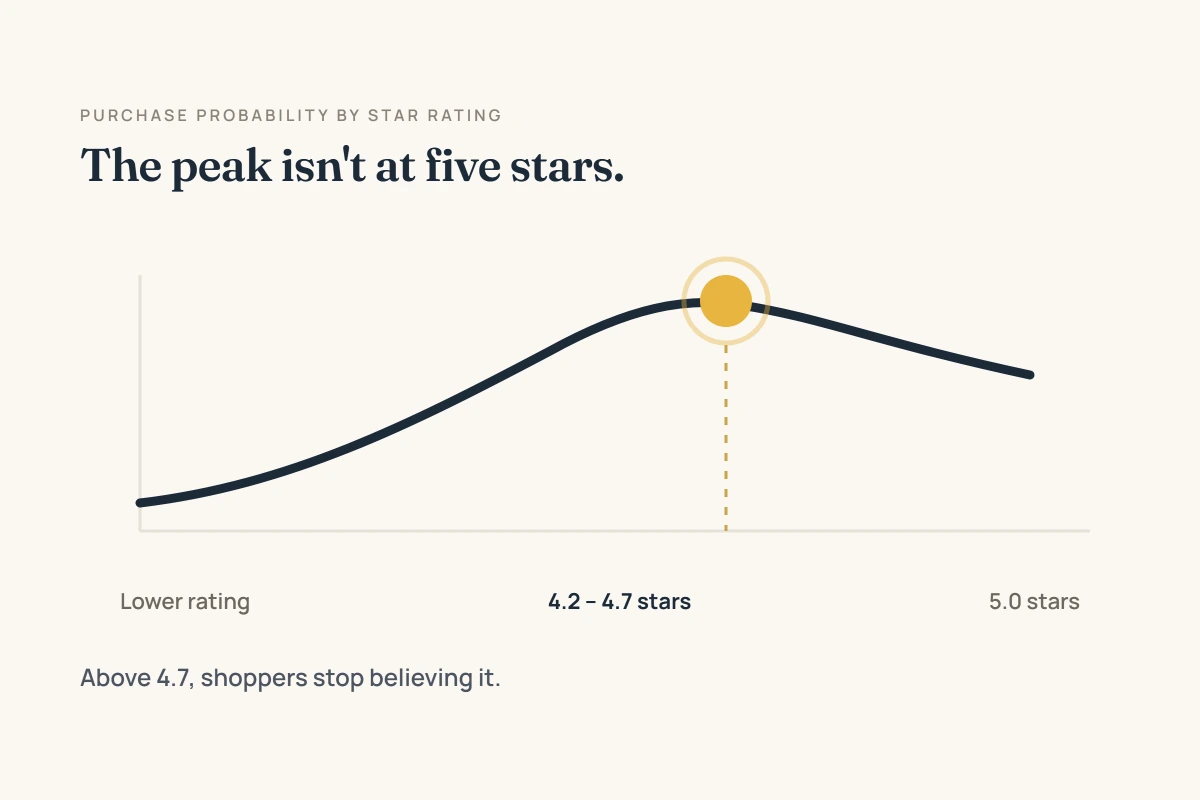
It reads as manipulated, curated, or too good to be true. A rating in the mid-fours, with a few critical reviews mixed in among the positive ones, reads as real. The occasional complaint about slow shipping or a slightly-too-small fit doesn't sink a sale. It's often what makes the good reviews around it believable.
This means the instinct to hide or delete negative reviews, or to only solicit feedback from happiest customers, can genuinely backfire. A too-perfect record isn't reassuring. It's a red flag.
Worth noting on the age of the research: the core study was originally published in 2017. The Spiegel Research Center itself revisited and restated the findings in December 2025, explicitly noting they remain highly relevant today, a direct, current reaffirmation from the original source rather than an old number being recycled without a second look.
What this actually means for a Shopify store
A few practical takeaways follow directly from the data:
- Get to five reviews on new products as fast as possible. That's where the steepest part of the conversion curve sits. A well-timed post-purchase request matters more than a big review-count target.
- Don't obsess over hitting five stars. A 4.3 to 4.6 average with some genuine, varied feedback is doing more for your conversion rate than a suspiciously perfect record.
- Prioritise reviews on your higher-priced products first, since that's where the research shows the effect is strongest, not on the cheap, easy-decision items where reviews matter least.
- Respond to negative reviews rather than hiding them. A visible response to a complaint does more for trust than the complaint's absence would.
Key takeaways
Reviews are one of the highest-leverage, lowest-cost things a store can invest in, worth a 270% purchase-likelihood lift with just five of them, and worth more the higher a product's price. But the goal isn't a flawless rating. It's a believable one. A handful of honest, slightly imperfect reviews will often outsell a suspiciously perfect five-star record, because shoppers have learned to be sceptical of things that look too good to be true.
Frequently Asked Questions
How many reviews does a product need to see a real conversion lift?
According to research from Northwestern University's Medill Spiegel Research Center, the purchase likelihood for a product with five reviews is 270% greater than for one with none, and most of the benefit of reviews shows up within that first handful rather than requiring hundreds more.
Is a perfect five-star rating actually a bad thing?
The same research found that products rated 4.7 to 5.0 stars are less likely to be purchased than those rated 4.2 to 4.7. Shoppers tend to view an all-five-star record with suspicion, while a mix of mostly positive with some critical reviews reads as more authentic.
Do reviews matter more for expensive products or cheap ones?
Reviews had a bigger effect on higher-priced products in the Spiegel Research Center's study, lifting conversion by 380% for higher-priced items compared to 190% for lower-priced ones, since shoppers seek more reassurance before a bigger financial commitment.
Should I hide or delete negative reviews?
The research suggests this can backfire. A small number of genuine critical reviews mixed in with mostly positive ones makes the overall rating more believable, and outright hiding negative feedback risks creating the "too good to be true" pattern shoppers have learned to distrust.
References
- Medill Spiegel Research Center, Northwestern University. How Online Reviews Influence Sales (2017; restated December 2025).
- Medill Spiegel Research Center, Northwestern University. From Reviews to Revenue.