The Psychology of Choice: Why More Options Can Mean Fewer Sales
More products do not always mean more sales. How choice overload cuts conversions, and how guided selling helps ecommerce stores boost revenue.
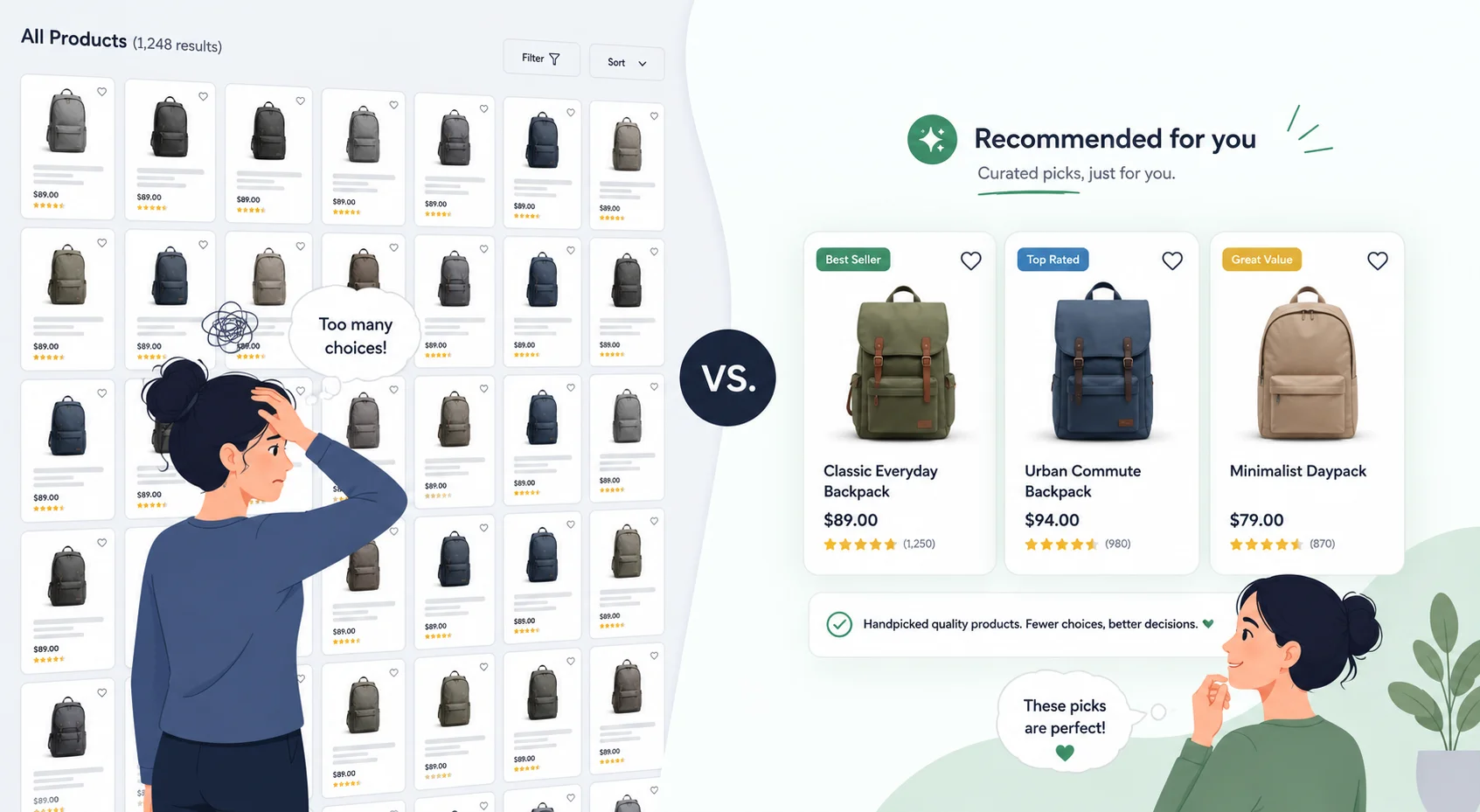
Everyone assumes more choice leads to more sales. It sounds logical: offer more products, and more customers will find something they like.
But decades of research show the opposite is often true. While larger product ranges attract attention, they can paralyze decision-making. When customers face too many similar options, they frequently abandon their purchase altogether.
Understanding choice overload is one of the simplest and most effective ways ecommerce businesses can improve conversion rates - without changing products or prices.
The Famous Jam Study
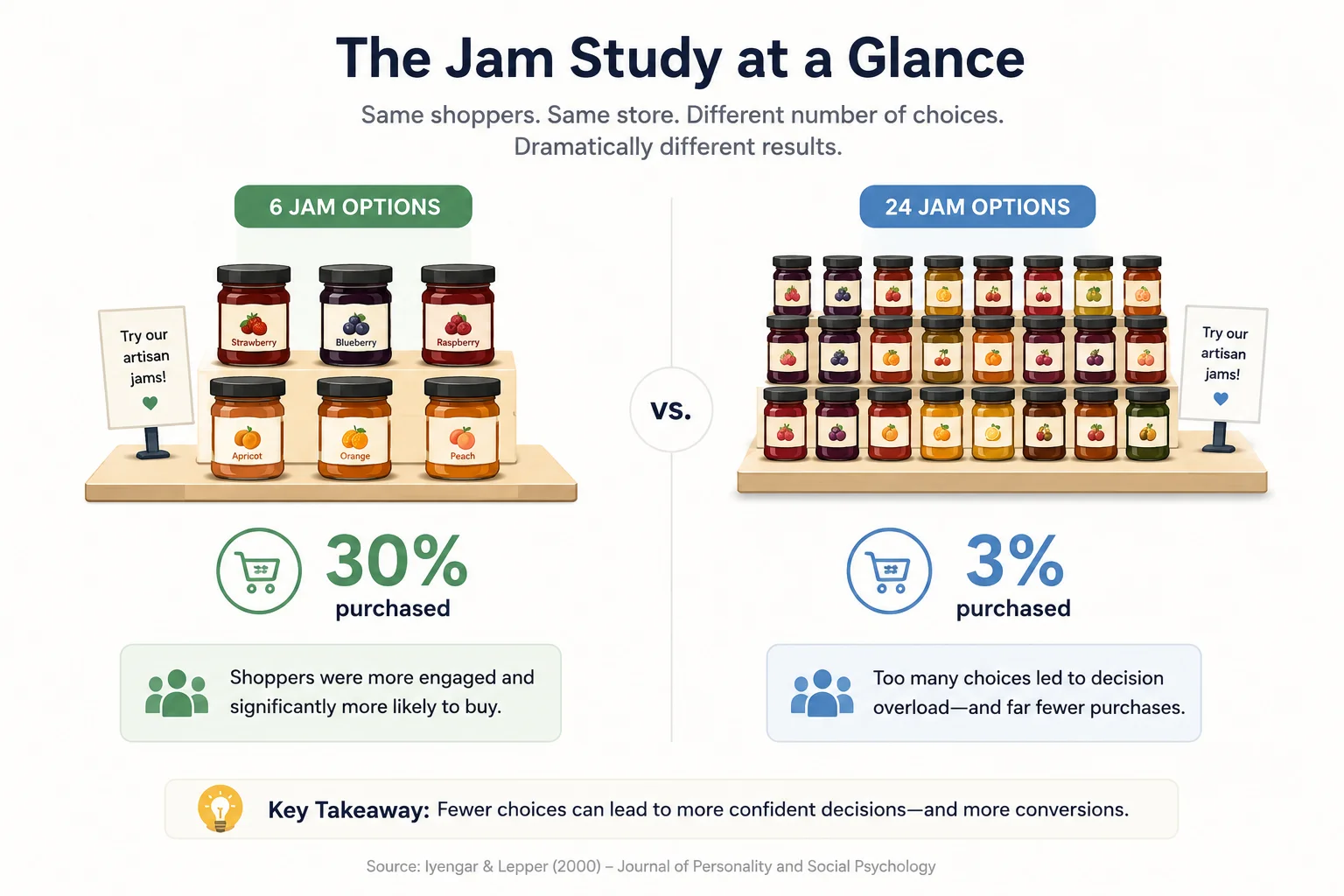
One of the most influential experiments in consumer psychology was conducted by Sheena Iyengar and Mark Lepper in 2000. Researchers set up a tasting table in a supermarket and alternated between offering shoppers six flavours of jam and twenty-four flavours.
The larger display drew far more visitors. More people stopped, more people tasted - but far fewer bought.
- With 6 options: ~30% of shoppers purchased a jar.
- With 24 options: Only 3% made a purchase.
The bigger selection generated more interest but roughly one-tenth of the sales.
Why Too Many Choices Reduce Conversions
Choosing between a few products feels easy. Choosing between dozens quickly becomes mentally exhausting. Each additional option adds another comparison, another trade-off, and another chance for doubt.
Eventually, the mental effort required outweighs the excitement of buying. Psychologists call this choice overload.
Online, it often appears as:
- Endless scrolling through similar products
- Confusing specifications and feature comparisons
- Decision fatigue leading to cart abandonment
- Post-purchase regret
Many shoppers leave not because they lack interest, but because deciding became too hard. Even those who complete a purchase from an overwhelming selection often feel less satisfied.
When Does Choice Overload Strike?
Choice overload isn't inevitable. Research shows it's most likely when:
- Products are difficult to compare
- Customers lack expertise in the category
- Many items look very similar
- Shoppers are looking for a quick decision
This pattern is common in categories like skincare, supplements, coffee, vitamins, pet food, fragrance, and gifts. Instead of feeling empowered, customers feel overwhelmed.
Your Collection Page Might Be the Problem
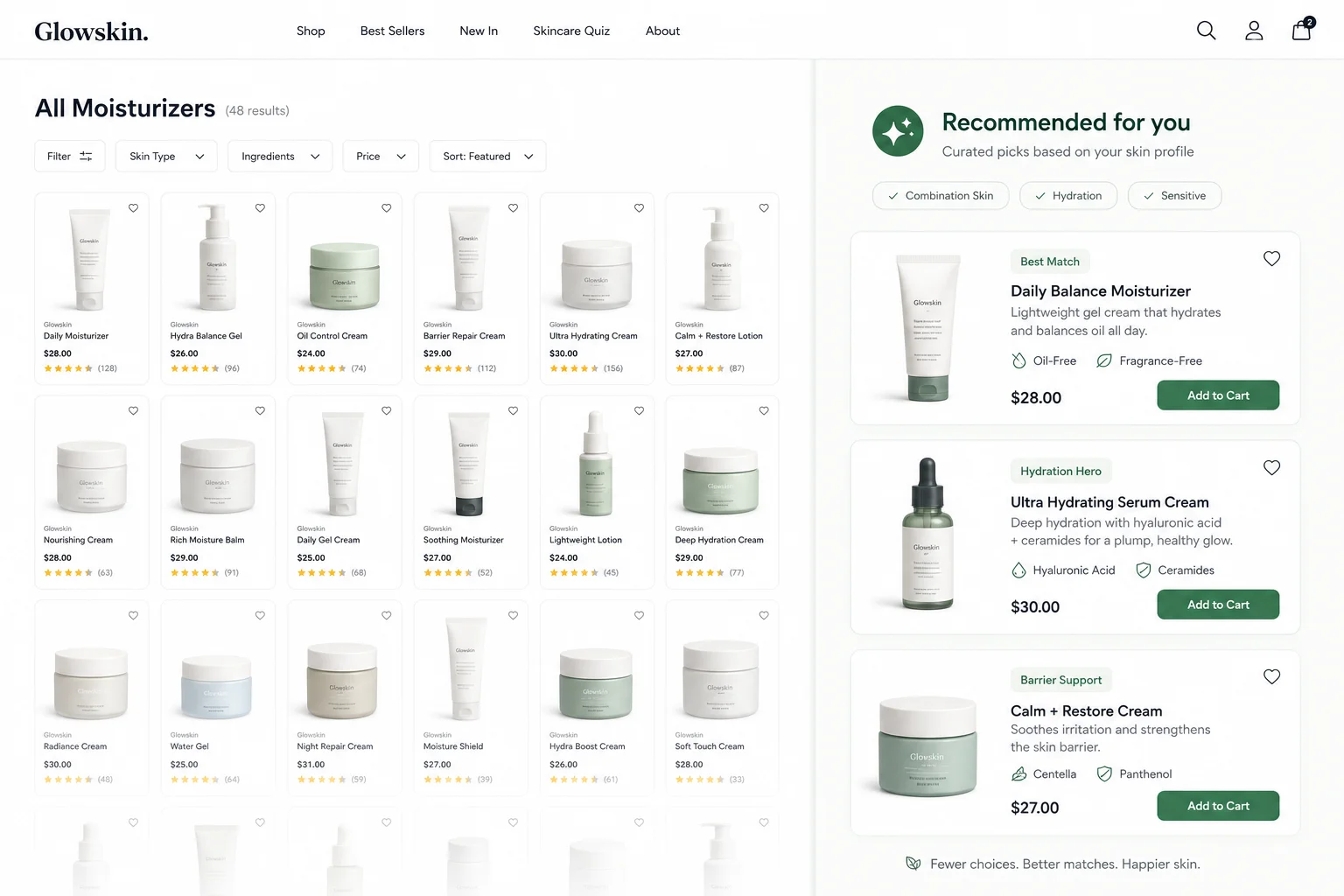
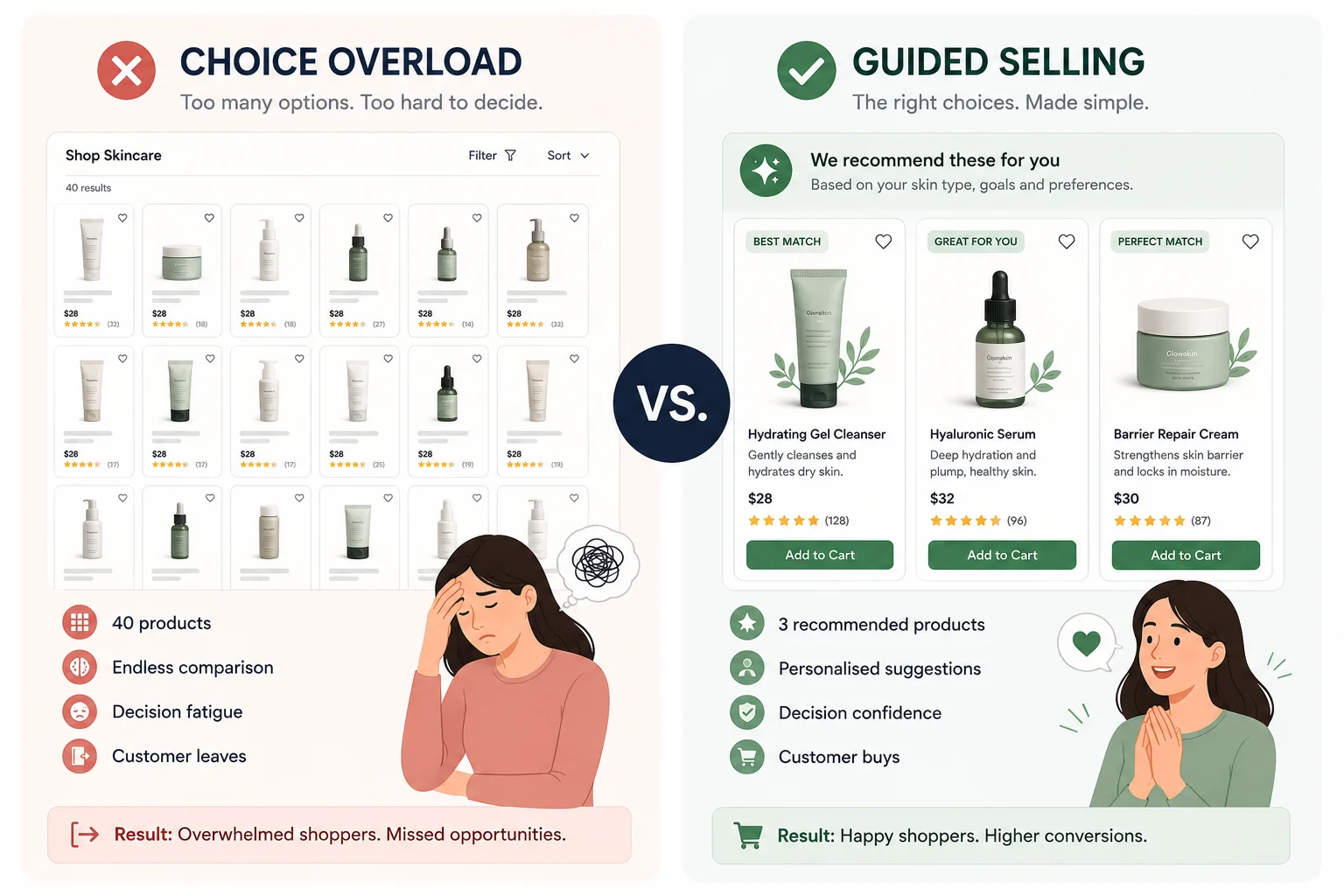
A category page with forty nearly identical products is the digital version of the twenty-four-jam table. It looks comprehensive and generous, but for new visitors it's often overwhelming.
The solution isn't shrinking your catalog. It's reducing the cognitive load customers face before they can buy.
Three Ways to Reduce Choice Overload
1. Curate Your Best Products
Guide customers with thoughtful collections such as:
- Best Sellers
- Start Here
- Best for Beginners
- Staff Picks
- Most Popular
Curated collections reduce friction right from the start.
2. Highlight a Default Choice
Don't treat every option equally. Make the best choice for most people obvious. A clear default dramatically lowers decision effort and speeds up purchases.
3. Use Guided Selling
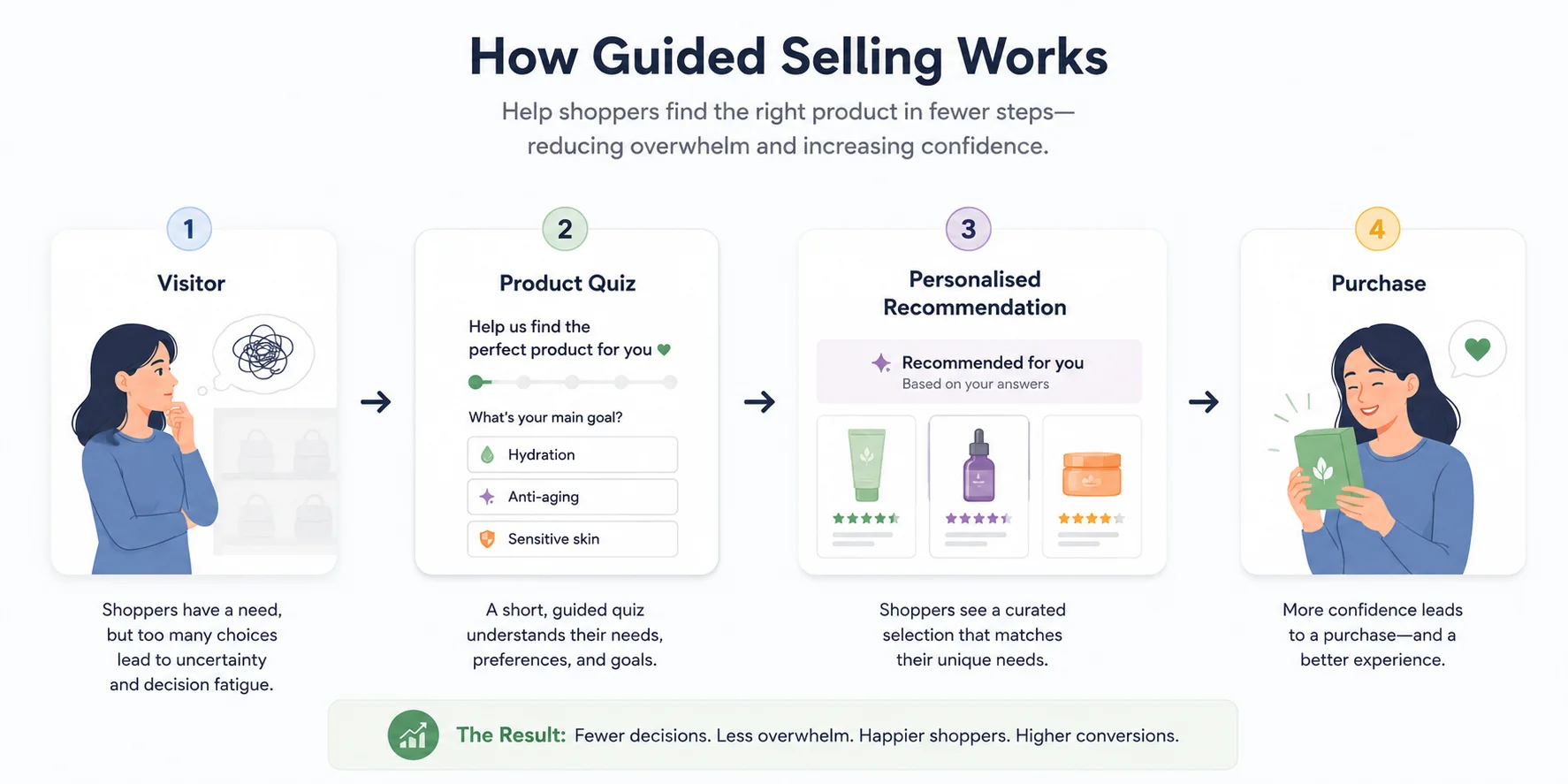
The most powerful approach is personalised recommendations. Instead of showing every product at once, ask a few simple questions and then recommend the best matches.
This technique - known as guided selling - reduces decision fatigue while building customer confidence and trust.
Full disclosure: This is exactly the problem we built Suggesto to solve. Naturally we're biased - but the principle holds regardless of the tool you use. The easier you make discovery, the easier you make purchasing.
Key Takeaways
Choice itself isn't the enemy, unmanaged choice is.
The best ecommerce stores don't necessarily offer fewer products. They help customers find the right product faster. By curating collections, highlighting smart defaults, and implementing guided selling, you reduce decision fatigue while preserving (and often improving) customer choice.
That's not limiting freedom. It's designing a better buying experience.
Frequently Asked Questions
What is choice overload?
Choice overload is a psychological phenomenon where people become less likely to make a decision (or purchase) when faced with too many similar options.
Does having more products always reduce sales?
No. Large catalogs can perform very well. The issue arises when products are hard to compare and require significant effort to evaluate.
What is guided selling?
Guided selling asks customers a few targeted questions about their needs and then recommends the most suitable products, making the experience personal and low-friction.
How can ecommerce stores reduce choice overload?
By creating curated collections, highlighting popular or default options, and implementing personalised recommendation tools like quizzes or guided selling flows.
References
Iyengar, S. S., & Lepper, M. R. (2000). When Choice Is Demotivating: Can One Desire Too Much of a Good Thing? Journal of Personality and Social Psychology.