Underconsumption Core: Does the Data Show Buying Less?
Underconsumption core has racked up tens of millions of TikTok views. The purchase data tells a more specific story about what people actually buy.
Scroll TikTok for more than a few minutes right now and you'll probably land on someone filming their nearly empty moisturizer bottle, their decade-old backpack, or a haul video that shows off exactly nothing. Underconsumption core has become one of the loudest stories in how shopping gets talked about online. The question that actually matters for a Shopify store is narrower and more useful: is it changing what people buy, or just how they talk about buying it?
What underconsumption core actually is
Underconsumption core is a TikTok trend that surfaced in mid-2024, built around "anti-haul" content: using a product until the bottle is scraped clean, wearing the same coat for years, showing off a sparse bathroom cabinet instead of a shopping bag. It grew directly out of de-influencing, the slightly earlier trend where creators told followers what not to buy. Underconsumption core goes a step further. It doesn't just steer people away from one overhyped product. It questions the habit of shopping as entertainment in the first place.
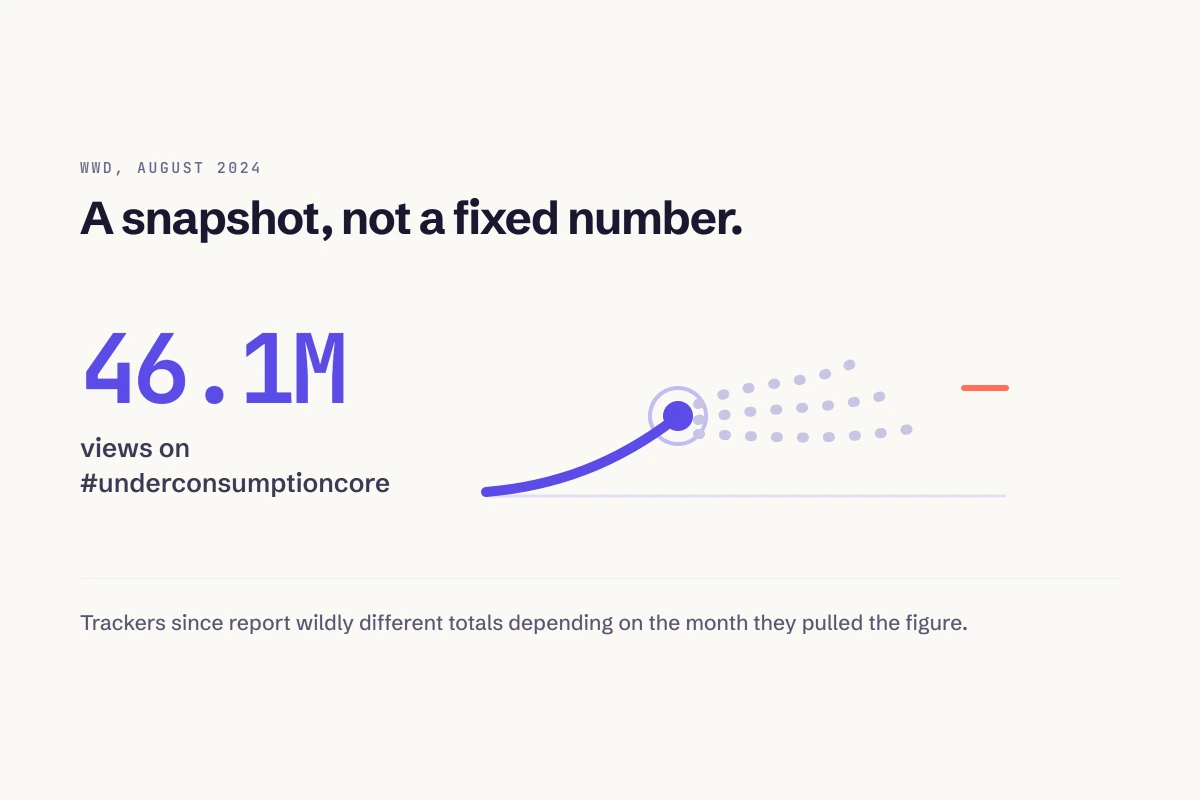
The scale is genuinely large, though the exact number depends entirely on when you check it, which is worth flagging up front given how this blog usually treats viral statistics. WWD, an established trade publication, reported in August 2024 that #underconsumptioncore had already passed 46.1 million views on TikTok. Emily Gordon-Smith, content director at the trend analysis firm Stylus, described it to WWD as a response to inflation, environmental concern about fashion waste, and fatigue with influencer content that increasingly reads as an ad. The hashtag has kept growing since, and different trackers report wildly different totals depending on the month they pulled the number, so treat any single figure you see elsewhere as a snapshot rather than a fixed fact.
Does the data actually show people buying less?
This is the question worth answering with something more reliable than a vibe. Measure Protocol, a behavioral data company, published an analysis in July 2026 that linked the same panelists' TikTok viewing and search activity to their actual receipt-level purchases on Amazon, Tesco, Walmart, delivery apps, and iOS, rather than relying on what people say about their own habits. The panel identified a cohort of users who watched or searched anti-haul and underconsumption content, then compared their real purchase behavior against the broader TikTok population.
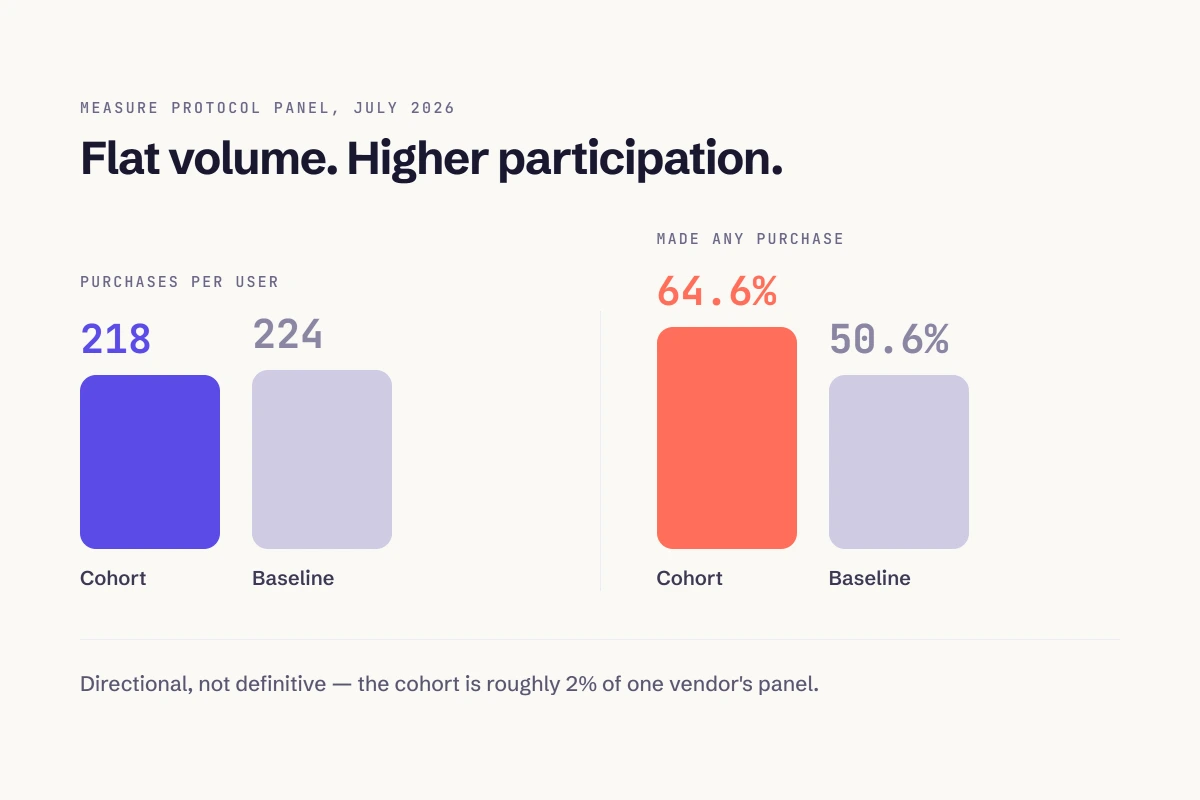
The answer is no. Purchase volume for the underconsumption cohort was statistically flat against the baseline, around 218 purchases per user compared with 224 for everyone else, a gap inside normal noise. If anything, the cohort bought more often in a different sense: 64.6% made at least one tracked purchase, against 50.6% of the baseline group, a 14-point gap in the other direction from what the aesthetic promises.
Worth knowing before you lean on this too hard: Measure Protocol is a data vendor, not an independent academic source, and it says plainly that the underconsumption cohort represents roughly 2% of its observed panel, which makes the findings directional rather than statistically bulletproof. The direction of the finding, that stated intent to buy less doesn't show up as reduced purchase volume, is the useful part. Treat the exact percentages as a snapshot from one panel rather than a universal law.
Where the spending actually goes
If people engaged with this content aren't buying less, what's actually changing? The panel data points to substitution, not abstinence. Category engagement barely moved: every category delta between the underconsumption cohort and the baseline came in under one percentage point, and beauty content engagement was very slightly higher in the cohort, not lower, the opposite of what the trend's own message would predict.
What did shift was where and what tier people bought. The underconsumption cohort skewed more heavily toward Amazon than the baseline (28.4% of purchase events versus 24.5%), was nearly three times as likely to buy through delivery apps like DoorDash and Uber Eats, and under-indexed on big-box grocery retail. Inside their Amazon purchases specifically, the only beauty brands that showed up in meaningful volume were value-tier names like e.l.f. Cosmetics, wet n wild, and CeraVe. No prestige or luxury beauty brand appeared at all. Measure Protocol's own framing of this is direct: the identity changes which brand tier someone buys and how they talk about the purchase. It doesn't remove the purchase itself.
That pattern lines up with something a much larger, more conventional survey has been tracking independently. Deloitte's ConsumerSignals platform surveyed 9,000 US consumers between September 2024 and May 2025 and found that 47% of consumers globally, including 35% of high-income households, now qualify as "value seekers," people who routinely sacrifice convenience or brand loyalty to control cost. Deloitte's own retail analysis is explicit that this isn't the same as consumption collapsing: overall spending, essential and discretionary combined, has generally kept increasing since 2022. What's changed is that shoppers have become more selective and more price-attentive about where each dollar goes, which is a very close match for what the TikTok-specific panel data found at a smaller scale.
What this means practically
A few things worth acting on if underconsumption sentiment shows up in your own customers:
- Don't read the aesthetic as a warning about your total demand. The purchase data doesn't support "people are buying less" as a literal forecast. It supports "people are more willing to switch, trade down, or delay if they don't feel confident in the purchase."
- Value framing beats aspirational framing right now. Deloitte's independent survey and Measure Protocol's TikTok-specific panel both point the same direction: durability, cost-per-use, and honest value messaging are doing more work with today's shopper than a pure trend or luxury pitch.
- The real risk is tier erosion, not category collapse. Nobody in this data stopped buying beauty or fashion. Some of them started buying a cheaper version of the same category. If your product sits in a premium tier, the competitive threat right now is a value alternative, not a shopper who's opted out of buying anything at all.
- "Buy less, but buy right" is a genuine opening, not just a slogan. A shopper primed to be skeptical of another impulse haul still wants the thing that actually works for them. This is where a short guided quiz earns its keep: it's a small, honest way to help someone land on the one product that fits instead of buying two or three to figure it out by trial and error, which is exactly the kind of waste underconsumption content is reacting against in the first place. It's not the only lever here, clear sizing information and honest product detail do real work too, but it's a natural fit for a shopper who wants to feel like they made one considered decision rather than another impulse purchase.
Key takeaways
Underconsumption core is a real, fast-growing cultural moment, but the purchase data behind it tells a more specific story than the aesthetic suggests. People engaged with the trend aren't buying less. They're buying differently: trading prestige for value, shifting toward Amazon and delivery apps, and reframing the same shopping habits as more intentional. A separate, much larger Deloitte survey backs up the underlying shift toward value-seeking without showing overall spending in decline. For a small Shopify store, the practical read isn't to brace for less demand. It's to earn the "I bought this on purpose" framing shoppers are currently rewarding.
Frequently Asked Questions
Does underconsumption core actually mean people are buying less?
Not according to the purchase data. Measure Protocol's behavioral panel found that TikTok users engaged with underconsumption content bought at effectively the same volume as the general TikTok population (about 218 versus 224 purchases per user), and were actually more likely to have made a purchase at all (64.6% versus 50.6%).
What is underconsumption core?
It's a TikTok trend, first appearing in mid-2024, in which creators post "anti-haul" content that celebrates using up what they already own instead of buying new things. It evolved from the earlier de-influencing trend and is tied to concerns about cost of living, fashion waste, and influencer-driven overconsumption.
If people aren't spending less, what is actually changing?
Behavioral purchase data points to substitution rather than reduction. Shoppers engaged with underconsumption content shift spending toward Amazon and delivery apps and trade down from prestige to value-tier brands within the same categories, rather than buying fewer things overall.
Is the "value-seeking" shift bigger than just this one TikTok trend?
Yes. Deloitte's ConsumerSignals survey of 9,000 US consumers found that 47% of consumers globally now behave as value seekers, and separate Deloitte retail analysis found that overall spending has generally kept increasing since 2022 even as shoppers became more selective. The TikTok-specific trend looks like one visible expression of a broader, independently documented shift.
References
- WWD (Women's Wear Daily). TikTok Trend Underconsumption Core Ticks Consumer Concerns on Spending, Sustainability (August 28, 2024).
- Measure Protocol. Underconsumption Core: Does Purchase Data Show Consumers Buying Less? (July 12, 2026).
- Deloitte. The Value-Seeking Consumer, Deloitte ConsumerSignals platform survey of 9,000 US consumers (September 2024 to May 2025).
- Deloitte Digital. Retail 2026: Consuming Differently in a Rapidly Transforming Sector (2026).